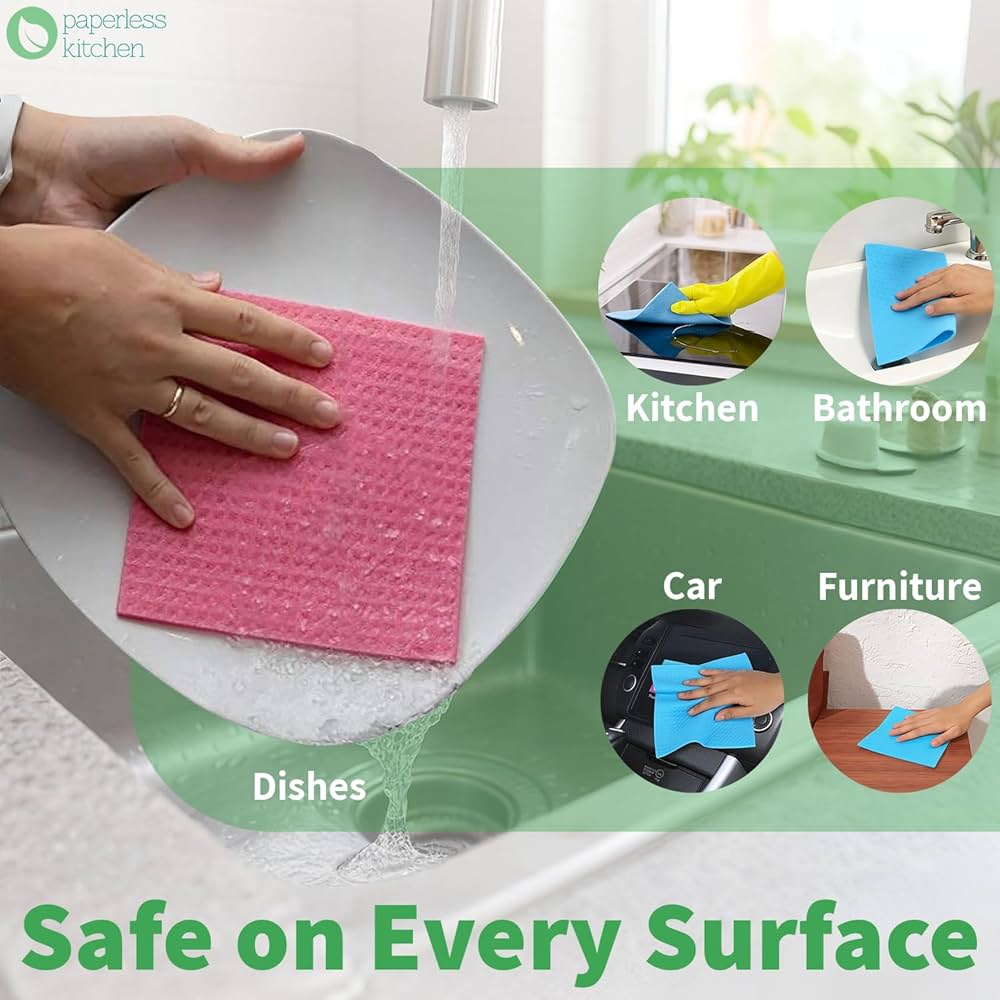
When it comes to keeping your kitchen spotless, you might wonder: which is better for cleaning—cloth or sponge? Choosing the right tool can make a big difference in how quickly and effectively you tackle those stubborn stains and spills.
You want something that’s easy to use, hygienic, and durable. You’ll discover the pros and cons of both cloths and sponges, helping you make a smart choice for your kitchen cleaning routine. Keep reading to find out which one truly earns a spot in your cleaning arsenal!

Credit: www.amazon.ca
Material Comparison
Cleaning the kitchen requires the right tools. Cloths and sponges are common choices. Both have different materials and uses.
This guide compares their materials to help you decide which works best for your kitchen cleaning.
Types Of Cloths
Kitchen cloths come in various materials. Each type suits different cleaning tasks and surfaces.
- Cotton Cloths:Soft and absorbent. Good for wiping spills and drying dishes.
- Microfiber Cloths:Made from synthetic fibers. Excellent at trapping dirt and grease.
- Linen Cloths:Durable and quick-drying. Often used for polishing and light cleaning.
- Cellulose Cloths:Made from natural fibers. Highly absorbent and biodegradable.
Types Of Sponges
Sponges also vary by material. Some are better for scrubbing, while others are gentle on surfaces.
- Cellulose Sponges:Natural fiber sponges. Absorb water well but can wear out fast.
- Foam Sponges:Made from synthetic foam. Soft and flexible for light cleaning.
- Abrasive Sponges:Have a rough side for scrubbing tough stains and grease.
- Synthetic Mesh Sponges:Durable and quick-drying. Often used for heavy-duty cleaning.
Durability And Lifespan
| Material | Durability | Average Lifespan | Care Notes |
|---|---|---|---|
| Cotton Cloth | Medium | 3-6 months | Machine washable, avoid bleach |
| Microfiber Cloth | High | 6-12 months | Wash separately, no fabric softener |
| Cellulose Sponge | Low | 2-4 weeks | Dry between uses, replace often |
| Foam Sponge | Medium | 1-3 months | Rinse well, air dry |
| Abrasive Sponge | Medium-High | 1-3 months | Use gently on delicate surfaces |

Credit: www.amazon.ca
Cleaning Efficiency
Choosing the right tool for kitchen cleaning affects how well you clean. Cloths and sponges each have strengths and weaknesses.
This guide compares cloths and sponges on cleaning efficiency in key kitchen tasks.
Removing Grease And Stains
Sponges often clean grease better because they hold soap and water well. They help break down oily stains quickly.
Cloths can remove stains but need frequent rinsing. Some cloths soak up grease but may spread it if not cleaned.
- Sponges trap grease and rinse easily
- Cloths absorb grease but need washing
- Sponges work faster on fresh stains
Handling Tough Residues
Sponges often have a rough side to scrub stuck food and residue. This makes them good for tough spots.
Cloths can scrub but may not remove hard residues well. They work best on smooth surfaces and light dirt.
- Sponges scrub stuck food better
- Cloths clean light dirt and smooth surfaces
- Sponges may wear out faster from scrubbing
Absorbency And Scrubbing Power
Cloths usually absorb more liquid, making them good for drying and wiping spills. They hold water well.
Sponges absorb liquids too, but their scrubbing side adds extra cleaning power. They mix absorbency with scrubbing.
- Cloths soak up spills well
- Sponges combine absorbency with scrubbing
- Sponges clean uneven surfaces better
Hygiene And Maintenance
Choosing between a kitchen cleaning cloth and a sponge affects hygiene. Both tools can clean well but need care. Proper maintenance stops germs from spreading.
Understanding how bacteria grow and how to clean these items helps keep your kitchen safe. Drying and storing also play a big role in hygiene.
Bacterial Growth Risks
Sponges have many holes that trap food and moisture. This makes them a perfect place for bacteria to grow fast. Cloths also hold bacteria if left wet or dirty.
Using the same cloth or sponge for a long time without cleaning increases risks. Bacteria can cause bad smells and spread illness in the kitchen.
Cleaning And Sanitizing Methods
To keep cloths and sponges safe, clean them often. Washing cloths in hot water kills most germs. Sponges can be microwaved or soaked in bleach water.
- Wash cloths in hot water with detergent
- Microwave wet sponges for 1-2 minutes
- Soak sponges in a bleach solution for 5 minutes
- Replace sponges and cloths regularly
Drying And Storage Tips
Drying cloths and sponges quickly stops bacteria growth. Keep them in a place with good air flow. Avoid leaving them in the sink or closed containers.
- Hang cloths to dry after use
- Store sponges where air can reach them
- Do not keep cloths and sponges in damp places
- Change items often to maintain hygiene
Environmental Impact
Kitchen cleaning cloths and sponges both help keep kitchens clean. They differ in how they affect the environment. Choosing the right one can lower waste and pollution.
This section explains the environmental impact of cloths and sponges. It covers biodegradability, reusability, and waste generation.
Biodegradability
Biodegradability means how fast a material breaks down in nature. Natural fibers in cloths break down faster than synthetic sponges.
Most sponges contain plastic or foam. These materials can take years to decompose. Cloths made from cotton or bamboo decay quickly.
- Cloths made of natural fibers are biodegradable
- Sponges with plastic parts are slow to break down
- Natural cloths cause less soil and water pollution
Reusability
Reusability means how many times you can use a product before throwing it away. Cloths can be washed and reused many times.
Sponges wear out faster and may hold bacteria. This can limit their reuse. Cloths often last longer if cleaned well.
- Cloths can be washed in machines and reused
- Sponges break down or smell after several uses
- Cloths reduce the need to buy new items often
Waste Generation
Waste generation is about how much trash a product creates. Sponges add more waste because they cannot be recycled easily.
Cloths create less waste since they last longer and biodegrade faster. Choosing cloths can help reduce household trash.
- Sponges are usually thrown away after a few weeks
- Cloths last months to years with good care
- Less waste means a smaller environmental footprint
Cost And Availability
Choosing between a kitchen cloth and a sponge depends on cost and availability. Both tools help keep your kitchen clean.
It is important to understand their prices, how often you replace them, and how easy they are to find.
Initial Purchase Price
Kitchen cloths usually cost less than sponges at first. You can buy cloths in packs for a low price. Sponges may cost more because of special materials.
- Cloths are cheaper per piece.
- Sponges can be more costly but last longer.
- Some sponges have extra features, raising the price.
Replacement Frequency
How often you replace a cloth or sponge changes the overall cost. Cloths need washing but can last longer. Sponges wear out faster and need more frequent replacement.
| Item | Typical Replacement Time |
| Kitchen Cloth | 2 to 4 weeks |
| Sponge | 1 to 2 weeks |
Accessibility In Markets
Both cloths and sponges are easy to find in stores. They are sold in supermarkets, online shops, and local markets.
- Kitchen cloths are widely available in various sizes and materials.
- Sponges come in many shapes and types, including antibacterial versions.
- Both are often found in cleaning sections or home goods aisles.

Credit: www.amazon.ca
User Preferences
Choosing between a kitchen cleaning cloth and a sponge depends on what users like. Each has its own benefits and fits different needs. People pick based on how easy it is to use, comfort, and cleaning power.
This guide looks at three key points to help decide which tool works better for your kitchen tasks.
Ease Of Use
Cloths and sponges offer different ways to clean. Cloths are usually simple and quick to rinse. Sponges hold water and soap well, which helps with scrubbing. Some users find cloths dry faster, reducing smell. Others like how sponges keep soap ready during cleaning.
- Cloths dry quickly and are easy to wring out.
- Sponges hold more soap and water for tough cleaning.
- Cloths can be used for wiping smooth surfaces fast.
- Sponges work better on stuck-on food and grime.
Comfort And Grip
Comfort plays a big role in user choice. Cloths are soft and feel gentle on hands. Sponges offer a firm grip and fit well in the palm. Some people prefer cloths for light cleaning because they feel less bulky. Others pick sponges to hold tightly during scrubbing.
| Feature | Cloth | Sponge |
| Softness | High | Medium |
| Grip | Moderate | Strong |
| Bulkiness | Low | Medium |
| Hand Comfort | Gentle | Firm |
Versatility In Cleaning Tasks
Users want tools that fit many cleaning jobs. Cloths work well for wiping counters and drying dishes. Sponges clean pots, pans, and stuck food better. Some users keep both to handle all kitchen messes.
Here is a quick look at what each tool cleans best:
- Cloth:Smooth surfaces, glass, and light spills.
- Sponge:Tough stains, cookware, and greasy spots.
Frequently Asked Questions
Which Cleans Better: Cloth Or Sponge For Kitchen?
Sponges absorb more dirt but can harbor bacteria. Cloths clean surfaces effectively and dry faster, reducing germs. Both work well, but cloths are safer for hygiene and long-term use.
Are Kitchen Cloths Or Sponges More Hygienic?
Kitchen cloths dry quickly, lowering bacteria growth. Sponges stay damp, promoting germs unless frequently sanitized. Cloths are generally more hygienic if washed regularly.
How Often Should I Replace Kitchen Sponges Or Cloths?
Replace sponges every 1-2 weeks due to bacteria buildup. Wash kitchen cloths daily and replace every 1-2 months. Regular cleaning maintains hygiene and prevents odors.
Can Cloths Or Sponges Remove Tough Kitchen Stains Better?
Sponges with abrasive sides tackle tough stains well. Cloths absorb spills and clean greasy surfaces effectively. Use sponges for scrubbing and cloths for wiping.
Conclusion
Choosing between a cloth and a sponge depends on your needs. Cloths dry quickly and can clean large surfaces well. Sponges hold soap and scrub tough stains easily. Both have pros and cons for kitchen cleaning. Think about what you clean most often.
Also, consider how often you replace them to stay clean. Either way, keep your tools fresh to avoid germs. Clean kitchens start with the right tools and good habits. Simple choices make kitchen cleaning easier and more effective.