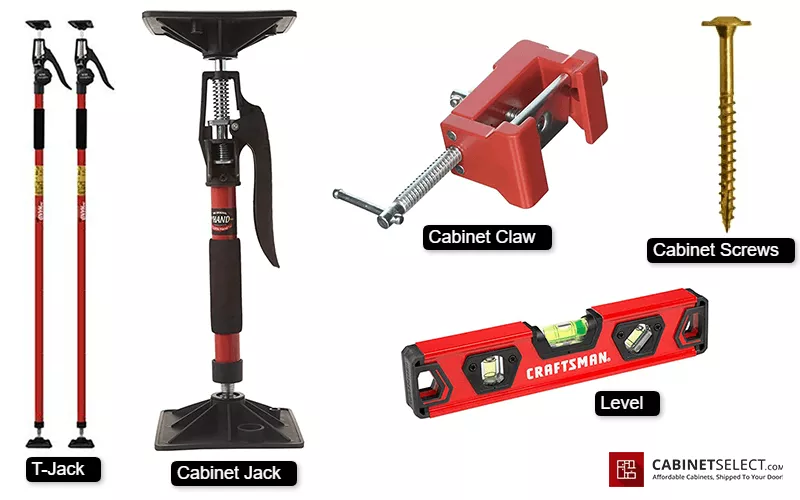
Are you ready to transform your kitchen but unsure what tools you need to install cabinets like a pro? Installing kitchen cabinets might seem tricky, but with the right tools in your hands, the job becomes much easier and more satisfying.
Imagine saving money by doing it yourself and enjoying a brand-new kitchen look in no time. You’ll discover exactly what tools you need to get started, step by step. By the end, you’ll feel confident and prepared to tackle your cabinet installation with ease.
Keep reading to unlock the secrets to a smooth, successful kitchen upgrade!
Credit: www.familyhandyman.com
Measuring Tools
Installing kitchen cabinets needs precise measuring tools. These tools help you get the right fit and alignment. Using the correct tools makes the job easier and the results better.
Below are the main measuring tools you need for cabinet installation. Each tool has a special role during the process.
Tape Measure
A tape measure is a flexible ruler used to measure length or distance. It helps you check the space where cabinets will go. Use it to measure walls, cabinet parts, and gaps.
- Choose a tape measure with a locking feature.
- Pick a length of at least 25 feet for kitchen use.
- Use the metric or imperial scale as per your preference.
Level
A level ensures your cabinets are straight and even. It shows if a surface is perfectly horizontal or vertical. This tool prevents cabinets from leaning or tilting.
| Type of Level | Use |
| Bubble Level | Check horizontal and vertical alignment |
| Laser Level | Project a straight line over long distances |
| Digital Level | Get precise angle measurements |
Square
A square helps you make perfect right angles. It is important when fitting cabinets together and against walls. It keeps corners sharp and accurate.
Common types of squares for cabinet installation include:
- Carpenter’s square for framing and large cuts
- Combination square for measuring and marking
- T-bevel for transferring angles
Cutting Tools
Installing kitchen cabinets requires precise cutting tools. These tools help shape wood and panels to fit perfectly. Choosing the right cutting tool makes the job easier and more accurate.
Below are common cutting tools used for cabinet installation. Each tool has specific uses and benefits for different tasks.
Circular Saw
A circular saw is a power tool with a round blade. It cuts straight lines quickly through large boards and sheets. It is ideal for cutting plywood and MDF for cabinets.
- Use a guide to keep cuts straight
- Adjust blade depth for clean cuts
- Wear safety glasses and ear protection
- Keep hands away from the blade
Jigsaw
A jigsaw is a handheld saw with a small blade that moves up and down. It cuts curves and shapes in wood. It is useful for cutting holes or detailed shapes in cabinet panels.
| Feature | Benefit |
| Variable speed | Adjust speed for different materials |
| Bevel cutting | Allows angled cuts up to 45 degrees |
| Orbital action | Improves cutting speed and finish |
Handsaw
A handsaw is a manual tool used for simple cuts. It is good for small adjustments or trimming cabinet parts. It does not need electricity and is easy to control.
- Crosscut saw – cuts across the wood grain
- Rip saw – cuts along the wood grain
- Backsaw – for precise, straight cuts
Drilling And Fastening Tools
Installing kitchen cabinets needs the right tools for drilling and fastening. These tools help fix cabinets firmly to walls and each other.
Using the proper tools makes the work faster and safer. It also ensures cabinets stay secure over time.
Power Drill
A power drill is essential for making holes and driving screws. It saves time and effort compared to manual tools.
Look for a drill with adjustable speed and torque. This helps prevent damage to cabinets or walls.
- Use drill bits suitable for wood or drywall
- Choose a cordless drill for better mobility
- Keep spare batteries charged for continuous work
Screwdrivers
Screwdrivers are needed for tightening and adjusting screws by hand. They offer control in tight spaces.
Have both flathead and Phillips head screwdrivers. Different screws need different tips for proper fastening.
- Use a screwdriver with a comfortable grip
- Magnetic tips hold screws firmly
- Small screwdrivers work well for hardware adjustments
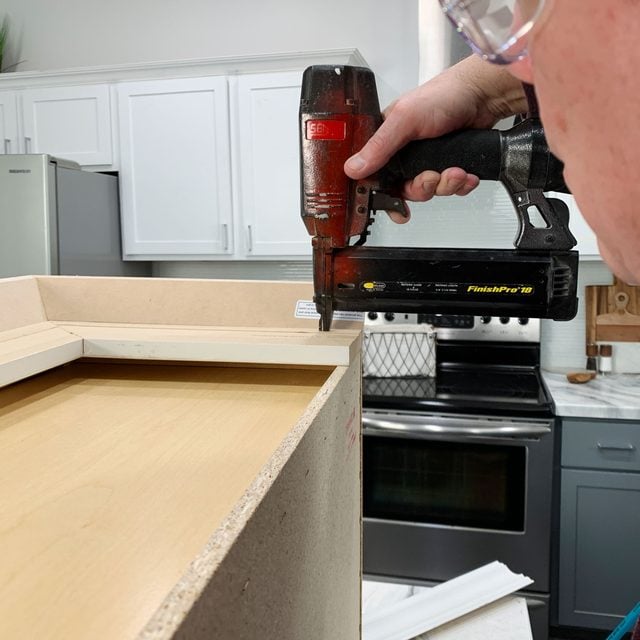
Nail Gun
A nail gun speeds up attaching trim and securing cabinets. It drives nails quickly and with consistent force.
Choose a nail gun that matches the size of nails you need. Always follow safety rules when using it.
- Use a pneumatic or battery-powered nail gun
- Select nails that fit your cabinet material
- Wear safety glasses and ear protection

Credit: www.create-enjoy.com
Marking Tools
Marking tools help you plan where to place kitchen cabinets. They make sure your measurements are clear and accurate.
Using the right marking tools saves time and reduces mistakes. You will mark lines and points for drilling and alignment.
Pencil
A pencil is a basic tool for marking measurements on walls or cabinets. It leaves clear, erasable lines.
Use a sharp pencil for precise marks. It helps you avoid errors during installation.
Chalk Line
A chalk line creates long, straight lines quickly. It is useful for marking cabinet heights and alignments.
You pull the line tight, snap it, and it leaves a clean chalk mark. This tool helps keep your cabinets level.
Safety Equipment
Installing kitchen cabinets involves using tools that can be dangerous. Wearing safety equipment helps protect you from injuries. It is important to use the right gear to stay safe during the work.
Safety equipment like glasses, gloves, and ear protection reduce risks. They keep your eyes, hands, and ears safe from harm. Always wear these items before starting your project.
Safety Glasses
Safety glasses protect your eyes from dust and flying debris. Wood chips and nails can cause serious eye injuries. Choose glasses that fit well and cover your eyes completely.
Look for glasses made from impact-resistant materials. Clear lenses work best indoors with good lighting. Make sure the glasses are comfortable to wear for long periods.
Gloves
Gloves protect your hands from cuts, splinters, and rough surfaces. Handling wood and tools can cause skin injuries. Use gloves made for construction or woodworking tasks.
Choose gloves that fit snugly but allow good movement. Look for materials like leather or thick fabric. Replace gloves if they become worn or torn during work.
Ear Protection
Power tools used to install cabinets can be very loud. Loud noise can damage your hearing over time. Ear protection helps reduce the noise to safe levels.
Use earplugs or earmuffs to protect your ears. Earplugs fit inside your ear canal, while earmuffs cover the ears. Pick the option that feels most comfortable for you.

Credit: www.reddit.com
Additional Helpful Tools
Installing kitchen cabinets needs more than basic tools. Some extra tools make the job easier and more precise.
These additional tools help with holding, measuring, and sealing during installation.
Clamps
Clamps hold cabinets firmly while you fasten them. They keep pieces steady and aligned.
- Use bar clamps for wide cabinets
- Spring clamps work well for small parts
- Adjust clamps to avoid cabinet damage
Stud Finder
A stud finder helps locate wall studs. Cabinets must be attached to studs for strong support.
| Type | Best For |
| Magnetic | Finding nails or screws in studs |
| Electronic | Detecting wood or metal studs behind drywall |
| Advanced | Locating live wires and pipes too |
Caulking Gun
A caulking gun applies sealant neatly around cabinets. It fills gaps and prevents water damage.
Tips for using a caulking gun:
- Cut the nozzle at a 45-degree angle
- Apply steady pressure for smooth lines
- Use painter’s tape for clean edges
Frequently Asked Questions
What Basic Tools Are Essential For Cabinet Installation?
Essential tools include a drill, level, tape measure, stud finder, and screwdriver. These tools ensure accurate measurements, secure mounting, and proper alignment during kitchen cabinet installation.
Do I Need Special Tools For Kitchen Cabinet Installation?
No special tools are required. Standard woodworking tools like a drill, level, and clamps suffice for most installations, making the process accessible for DIYers and professionals alike.
How Do I Choose The Right Drill For Cabinet Installation?
Choose a cordless drill with adjustable speed and torque settings. It offers flexibility, ease of use, and efficient drilling for screws and pilot holes in cabinet installation.
Why Is A Stud Finder Important For Installing Cabinets?
A stud finder helps locate wall studs, providing secure anchor points for cabinets. This prevents damage and ensures cabinets support weight safely and remain stable over time.
Conclusion
Installing kitchen cabinets needs the right tools for success. A drill, level, tape measure, and screwdriver are essential. These tools help keep cabinets straight and secure. Using the correct tools saves time and avoids mistakes. Preparing well makes the job easier and faster.
Remember, careful measurement matters most. With these tools, your kitchen project will run smoothly and look great. Simple tools, good planning, and focus lead to great results.