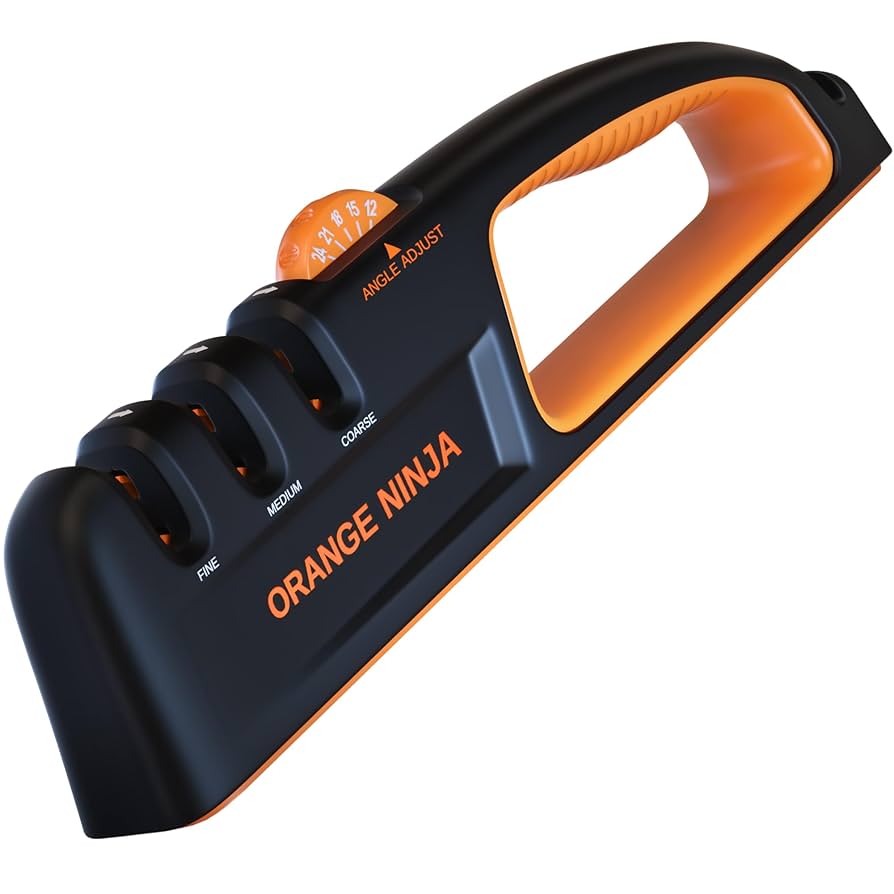
Are your kitchen knives dull and frustrating to use? You’re not alone.
A sharp knife makes cooking faster, safer, and more enjoyable. But with so many sharpening tools out there, how do you find the best one for your kitchen? This guide will help you discover the perfect knife sharpening tool that fits your needs and keeps your blades razor-sharp.
Keep reading—you’re just a few steps away from cutting like a pro every time.
Types Of Knife Sharpening Tools
Keeping kitchen knives sharp is important for safety and ease of use. Different tools can sharpen knives in various ways. Choosing the right tool depends on your skill and the knife type.
This guide explains common knife sharpening tools and their features. You will learn about manual sharpeners, electric sharpeners, sharpening stones, and honing rods.
Manual Sharpeners
Manual sharpeners are handheld devices that use abrasive surfaces to sharpen blades. They are simple to use and usually affordable. You pull the knife through the sharpener to restore its edge.
- Compact and easy to store
- No electricity needed
- Good for quick touch-ups
- May not sharpen as evenly as stones
Electric Sharpeners
Electric sharpeners use motorized abrasive wheels to sharpen knives quickly. They often have multiple stages for different sharpening steps. These tools save time and effort compared to manual methods.
| Feature | Manual Sharpeners | Electric Sharpeners |
| Speed | Slower | Faster |
| Ease of Use | Simple | Very Simple |
| Cost | Low to Medium | Medium to High |
| Portability | High | Low |
Sharpening Stones
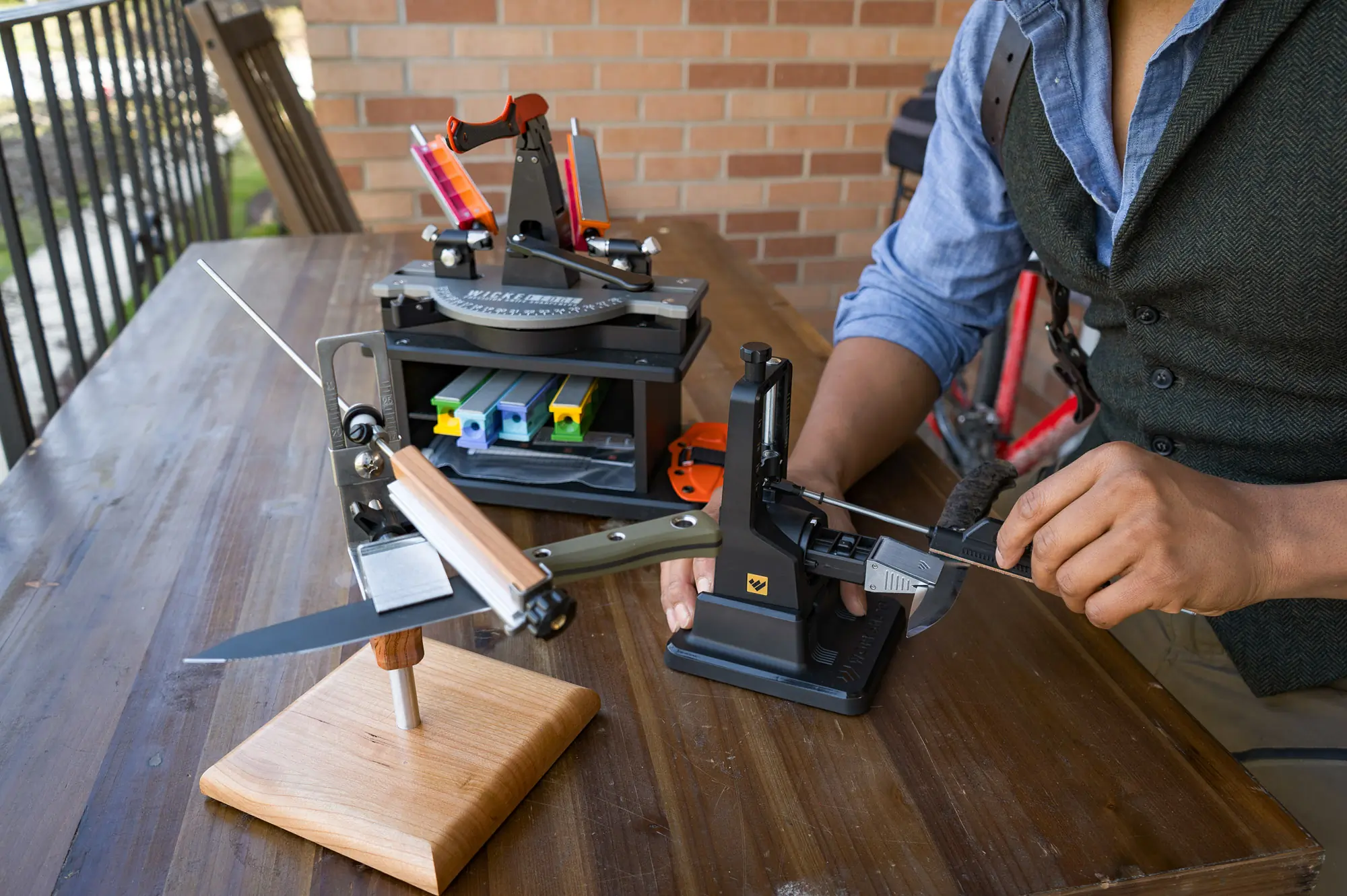
Sharpening stones, also called whetstones, offer precise control. Users slide the knife across the stone at a set angle. Stones come in different grits for coarse to fine sharpening.
- Require practice to use well
- Can sharpen many knife types
- Last a long time with care
- Need water or oil for best results
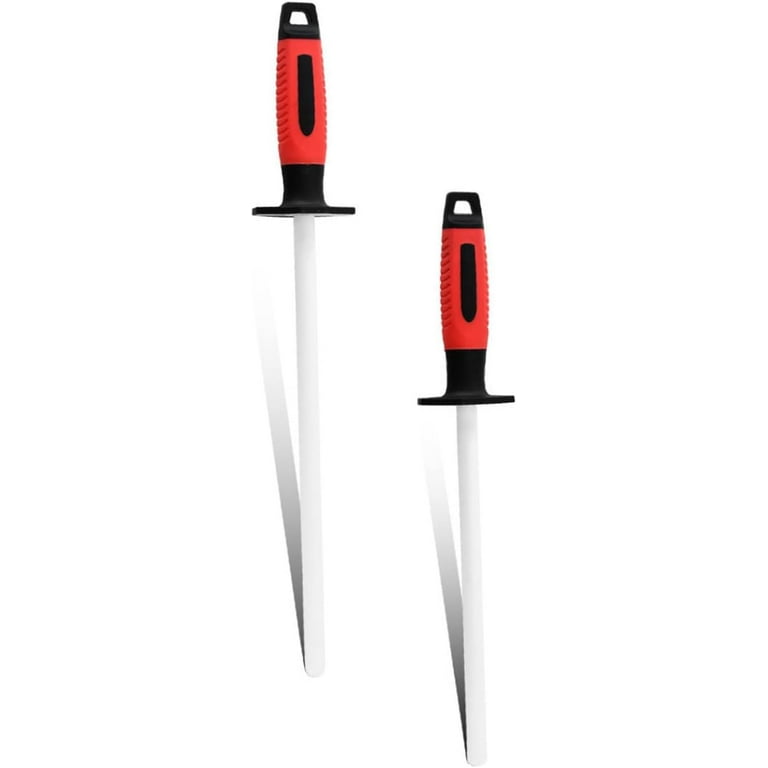
Honing Rods
Honing rods do not sharpen but realign the knife edge. They keep blades straight between sharpenings. Most chefs use honing rods regularly to maintain knife performance.
- Made of steel, ceramic, or diamond-coated
- Used before or after cooking
- Improve cutting by fixing the edge angle
- Do not remove metal from the blade
Key Features To Consider
Choosing the best knife sharpening tool for your kitchen means looking at several important features. These features help you pick a tool that matches your needs and skill level.
This guide breaks down key points to think about before buying a sharpener.
Ease Of Use
A good sharpening tool should be simple to handle. Look for models that work quickly without complex steps. Some sharpeners have guides to keep the blade angle right.
Sharpening Precision
Precision matters for a sharp edge. Tools with adjustable angles or multiple grit levels offer better control. This lets you sharpen both dull and fine knives properly.
Durability
| Material | Durability Level |
| Ceramic | Medium – wears over time |
| Diamond-coated | High – long lasting |
| Steel | High – strong but needs care |
| Stone | Medium to High – depends on quality |
Choose a material that lasts long and fits your sharpening style.
Safety Features
- Non-slip bases to keep the tool steady
- Finger guards to protect your hands
- Clear instructions for safe use
Safety features reduce the risk of accidents during sharpening.
Price Range
Sharpener prices vary from low to high. Basic models are cheaper but may wear fast. Higher-priced tools often offer better build and sharper results.
Set a budget that matches how often you plan to sharpen your knives.
Top Manual Sharpeners
Keeping kitchen knives sharp makes cooking easier and safer. Manual sharpeners are simple tools to restore blade edges.
They work without electricity and fit in any kitchen drawer. Many models offer good results at a low cost.
Popular Models
The most popular manual sharpeners include pull-through and rod types. Pull-through sharpeners are easy to use.
Sharpening rods let you control the angle but need more skill. Some top brands are Chef’s Choice, Smith’s, and Wüsthof.
- Chef’s Choice Pull-Through Sharpener
- Smith’s Sharpening Steel Rod
- Wüsthof Dual-Stage Sharpener
- Victorinox Ceramic Rod
Pros And Cons
Manual sharpeners are easy to carry and use anytime. They do not need power or batteries.
They work fast but may wear knives if used wrong. Some need practice to keep the right angle.
- Pros:Portable, affordable, quick sharpening
- Cons:Can damage blades, require skill, less consistent
Credit: www.walmart.com
Best Electric Sharpeners
Electric knife sharpeners make it easy to keep your kitchen knives sharp. They work fast and require less effort than manual tools.
Choosing the right electric sharpener depends on your needs and the types of knives you use. Let’s look at some top options and their features.
Highly Rated Options
Many electric sharpeners have good reviews for their ease of use and quality results. Here are some popular models:
- Chef’sChoice Trizor 15XV – known for sharpening straight and serrated edges.
- Work Sharp Culinary E5 – offers adjustable sharpening angles.
- Presto 08810 – compact and budget-friendly for home use.
- Brusletto Electric Sharpener – designed for quick sharpening with ceramic wheels.
Performance And Speed
| Model | Sharpening Stages | Time per Sharpening | Suitable Knife Types |
| Chef’sChoice Trizor 15XV | 3 Stages | About 3 minutes | Straight, Serrated |
| Work Sharp Culinary E5 | 3 Stages | 4-5 minutes | All Kitchen Knives |
| Presto 08810 | 2 Stages | 2-3 minutes | Straight Edge |
| Brusletto Electric Sharpener | 2 Stages | 2 minutes | Straight Edge |
Recommended Sharpening Stones
Keeping your kitchen knives sharp is important for safety and ease of use. Sharpening stones are one of the best tools for this job. They help maintain a sharp edge on your knives for better cutting.
There are different types of sharpening stones. Each type has unique features that suit various sharpening needs. Knowing how to use them properly can improve your knife’s performance.
Types Of Stones
Sharpening stones come in natural and synthetic forms. They vary in grit size, which affects how much metal they remove from the blade. Coarse stones remove more metal and fix dull blades. Fine stones polish and sharpen the edge.
- Coarse Stones:Grit 200-600. Use for repairing chips or very dull knives.
- Medium Stones:Grit 800-1500. Best for regular sharpening and edge shaping.
- Fine Stones:Grit 3000-8000. Use to polish and refine the blade edge.
- Natural Stones:Made from natural minerals. They provide a smooth finish but can be expensive.
- Synthetic Stones:Made from man-made materials like aluminum oxide. They are affordable and consistent.
How To Use Them
Start with a coarse stone if your knife is very dull. Use water or oil as a lubricant depending on the stone type. Hold the knife at a steady angle, usually 15-20 degrees. Move the blade across the stone with light pressure.
After using a coarse or medium stone, switch to a fine stone for polishing. Use the same angle and smooth strokes. Clean the blade and stone after sharpening to remove metal particles.
- Soak the stone in water for 5-10 minutes if needed.
- Hold the knife at a 15-20 degree angle.
- Push the blade across the stone from heel to tip.
- Repeat strokes evenly on both sides of the blade.
- Use finer stones to finish and polish the edge.
- Wipe the knife clean after sharpening.
Credit: gearjunkie.com
Honing Rods For Everyday Maintenance
Honing rods keep your kitchen knives sharp between full sharpenings. They do not remove metal but realign the blade edge.
Using a honing rod regularly helps your knives cut smoothly and last longer. It is an easy way to maintain sharpness.
Choosing The Right Rod
Select a honing rod based on the knife type and material. Steel rods suit most kitchen knives well.
Ceramic rods are good for very hard knives but require careful use. Avoid rods that are too coarse for daily maintenance.
- Steel rods: Best for most kitchen knives
- Ceramic rods: For hard or specialty blades
- Diamond rods: Use sparingly, more abrasive
Proper Technique
Hold the rod vertically with the tip on a stable surface. Keep the knife at a 15 to 20-degree angle to the rod.
Draw the knife down and across the rod, from heel to tip, using light pressure. Repeat on the other side of the blade.
- Use smooth, controlled strokes
- Maintain a consistent angle
- Alternate sides with each stroke
- Perform 5 to 10 strokes per side
Tips For Maintaining Sharp Knives
Keeping your kitchen knives sharp is key for safe and easy cutting. Sharp knives work better and need less force.
Use the right tools and habits to keep your knives in good shape for a long time.
Regular Sharpening Schedule
Sharpen your knives often to keep their edge. How often depends on use and knife type.
- Check knives for dull spots every few weeks.
- Use a whetstone or sharpening tool to fix the edge.
- Hone knives with a steel rod between sharpenings.
- Replace sharpening tools when worn out.
Proper Storage
Store knives safely to avoid damage to the blade and accidents.
- Use a knife block or magnetic strip to keep blades separate.
- Avoid loose storage in drawers where blades can dull.
- Keep knives dry to stop rust or corrosion.
- Keep knives out of reach of children.
Cleaning And Care
Cleaning knives properly helps keep the blade sharp and safe to use.
| Cleaning Tip | Do | Don’t |
| Washing | Hand wash with warm, soapy water | Use dishwasher |
| Drying | Dry immediately after washing | Leave wet or soak |
| Handling | Use soft cloth to clean and dry | Use abrasive sponges |
| Storage | Store dry and separated | Stack knives together |

Credit: www.amazon.com
Frequently Asked Questions
What Is The Best Kitchen Knife Sharpening Tool?
The best kitchen knife sharpening tool is a whetstone. It offers precise control and sharpens knives evenly for a long-lasting edge.
How Often Should I Sharpen My Kitchen Knives?
Sharpen kitchen knives every 1-3 months, depending on use. Regular sharpening maintains blade sharpness and ensures safe, efficient cutting.
Can I Use An Electric Sharpener For Kitchen Knives?
Yes, electric sharpeners are quick and user-friendly. However, they may remove more metal and reduce blade lifespan if used excessively.
What Is The Difference Between Honing And Sharpening?
Honing realigns a knife’s edge without removing metal. Sharpening grinds the blade, creating a new edge for better cutting performance.
Conclusion
Choosing the right knife sharpening tool makes kitchen work easier. Sharp knives cut better and safer. Handheld sharpeners suit quick fixes. Electric sharpeners save time and effort. Whetstones give more control but need practice. Think about your skill and needs before buying.
A good sharpener keeps your knives ready for any meal. Keep your blades sharp, and cooking stays fun and safe.