If you’ve ever struggled with food sticking to your pans or uneven cooking, learning how to cook on stainless steel cookware can change everything. You might think stainless steel is tricky, but with the right tips, it becomes your kitchen’s best friend.
Imagine perfectly seared steaks, golden veggies, and easy cleanup—all from pans you already own. Ready to unlock the full potential of your stainless steel cookware? Keep reading, and you’ll discover simple tricks that make cooking easier, tastier, and more enjoyable every time you step into the kitchen.
Choosing The Right Stainless Steel Pan
Stainless steel cookware is a popular choice for cooking. It is strong, lasts a long time, and looks good in any kitchen.
Picking the right pan helps you cook better and enjoy your meals more. There are different types, sizes, and features to think about.
Types Of Stainless Steel Cookware
Not all stainless steel pans are the same. Some have layers of other metals to help heat spread evenly. Others are pure stainless steel.
- Tri-ply pans have layers of stainless steel and aluminum for even heat.
- Single-ply pans are lighter but may heat unevenly.
- Clad pans have a thick base that prevents hot spots.
Pan Sizes And Thickness
Pans come in many sizes. Choose one that fits your cooking needs. A thicker pan holds heat better and cooks food evenly.
- Small pans (8-10 inches) are good for sauces and small meals.
- Medium pans (10-12 inches) work well for most dishes.
- Large pans (12+ inches) are best for big meals or families.
- Thicker pans reduce the chance of burning food.
Handles And Lids
Good handles make pans easy to use and safe. Look for sturdy, heat-resistant handles. Lids help keep heat and moisture inside.
- Stainless steel handles stay cool and are strong.
- Some handles have silicone for better grip.
- Flat lids fit tightly for better cooking control.
- Glass lids let you watch food without lifting.

Credit: www.carawayhome.com
Preparing Your Pan For Cooking
Using stainless steel cookware needs some care before cooking. Preparing your pan helps food cook better.
This guide covers cleaning, preheating, and oiling your pan for best results.
Cleaning Before Use
New stainless steel pans often have a protective coating or residues. Clean the pan well before first use.
- Wash with warm water and mild dish soap
- Use a soft sponge to avoid scratches
- Rinse thoroughly to remove soap
- Dry completely with a clean towel
Preheating Techniques
Preheating your pan evenly prevents food from sticking and cooks it well. Use medium heat for best results.
| Heat Level | Time to Preheat | Signs Your Pan Is Ready |
| Low | 2-3 minutes | Water droplets move slowly |
| Medium | 3-4 minutes | Water droplets form beads and dance |
| High | 1-2 minutes | Water evaporates quickly |
Oiling Tips
Adding oil at the right time helps create a non-stick surface. Use oils with high smoke points like canola or vegetable oil.
Follow these oiling tips:
- Heat pan first before adding oil
- Add 1-2 teaspoons of oil to cover the surface
- Swirl oil to coat evenly
- Wait until oil shimmers before adding food
- Do not let oil smoke or burn
Mastering Heat Control
Cooking with stainless steel cookware needs good heat control. You can cook food evenly and avoid sticking by managing heat well.
Understanding how to use low, medium, and high heat helps you get the best results. This guide explains how to control heat for different cooking needs.
Low Heat Uses
Low heat is best for gentle cooking. It helps keep food warm without burning it. Use low heat for melting butter, simmering sauces, or cooking eggs.
Cooking on low heat lets flavors develop slowly. It also protects delicate foods from getting tough or dry.
Medium Heat Uses
Medium heat works well for most cooking tasks. It is good for sautéing vegetables, cooking meats, and making pancakes. It cooks food evenly without burning.
This heat level helps brown food nicely while keeping the inside moist. It is a safe choice for many recipes.
High Heat Uses
High heat is used for quick cooking or searing. It creates a brown, crispy surface on meats and stir-fried dishes. Use it carefully to avoid burning.
Stainless steel handles high heat well but watch food closely. Turn the heat down once the surface is seared.
Avoiding Hot Spots
Hot spots cause food to cook unevenly. Stainless steel pans can have spots that get hotter than others. Move food often to avoid burning.
Preheat the pan slowly and evenly. This helps heat spread across the surface. Use a pan with a thick bottom to reduce hot spots.
- Heat the pan for 1-2 minutes before adding food
- Stir or turn food regularly
- Use cookware with an aluminum or copper core
Adjusting Heat During Cooking
Change the heat as your food cooks. Start with high heat to sear, then lower it to finish cooking. This prevents burning and ensures even cooking.
Watch your food and listen for sounds. Reduce heat if food sizzles too loudly or starts to smoke. Increase heat if food cooks too slowly.
- Start hot for searing or boiling
- Lower heat for simmering or gentle cooking
- Adjust heat based on how food cooks
Techniques For Cooking Different Foods
Cooking on stainless steel cookware needs some special methods. This type of cookware heats evenly and lasts long. You can cook many foods well with the right techniques.
This guide covers ways to sear meats, sauté vegetables, and cook eggs without sticking. Each method helps you use stainless steel pots and pans better.
Searing Meats
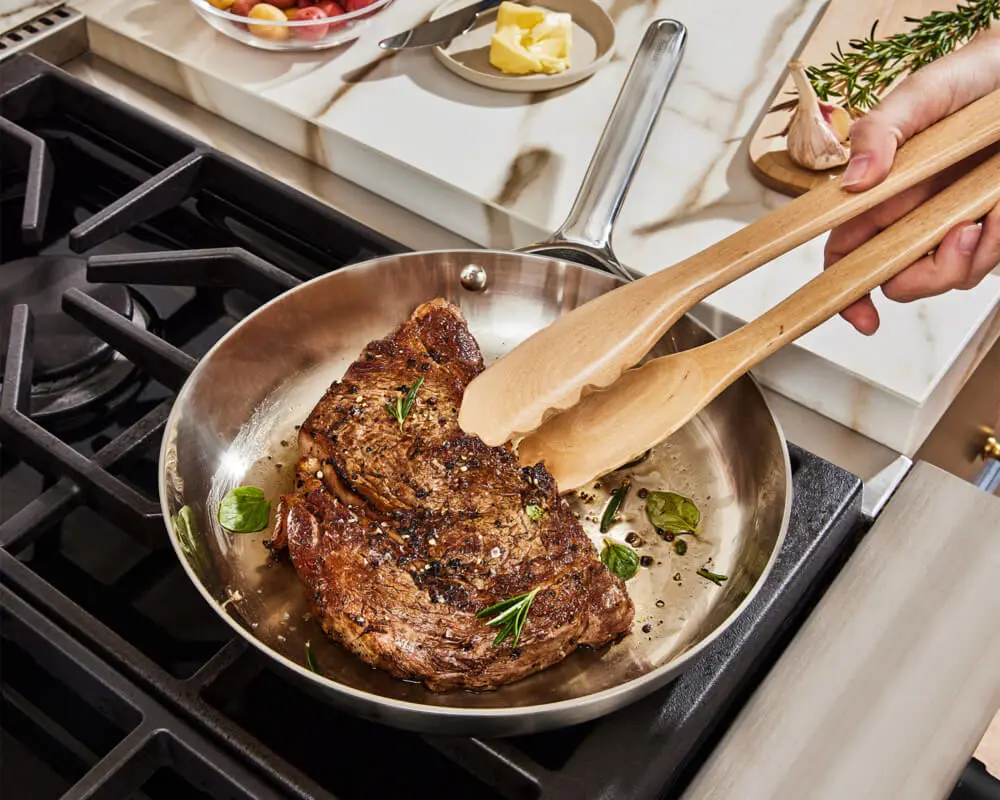
Searing locks in juices and adds color to meats. Heat your pan before adding oil. Wait until the oil shimmers, then add the meat.
- Pat meat dry to avoid steam
- Use high heat for a crispy crust
- Do not move meat too soon
- Let meat rest after cooking
Sautéing Vegetables
Sauté vegetables quickly to keep their color and crunch. Use medium-high heat and a small amount of oil. Stir often to cook evenly.
| Vegetable | Cooking Time | Oil Type |
|---|---|---|
| Bell Peppers | 3-4 minutes | Olive oil |
| Broccoli | 5-6 minutes | Canola oil |
| Zucchini | 4-5 minutes | Avocado oil |
Cooking Eggs Without Sticking
Eggs can stick to stainless steel if the pan is not ready. Heat the pan first, then add oil or butter. Let the fat heat before adding eggs.
Tips for cooking eggs on stainless steel:
- Use fresh eggs for best results
- Keep heat medium to low
- Do not stir eggs immediately
- Use a silicone spatula to flip
- Clean pan thoroughly after each use
Preventing Food Sticking
Cooking on stainless steel cookware can be tricky if food sticks to the pan. Sticking happens when food binds to the pan surface. You can avoid this by using the right techniques.
Three important factors help prevent sticking: pan temperature, amount of oil, and timing to flip or stir. Each plays a key role in cooking smoothly.
Proper Pan Temperature
Heat your pan before adding food. A hot pan forms a natural barrier that stops food from sticking. Test the temperature by sprinkling a few drops of water on the pan. If the drops dance and evaporate quickly, the pan is ready.
Do not add food to a cold pan. Food will stick and cook unevenly. Keep the heat medium to medium-high for best results.
Using The Right Amount Of Oil
Oil creates a thin layer between the food and pan. Too little oil causes sticking. Too much oil can make food greasy. Use just enough to coat the pan evenly.
- Pour oil into the cold pan before heating.
- Swirl the oil to cover the surface completely.
- Wait for the oil to shimmer but not smoke.
- Add food gently to the pan.
When To Flip Or Stir
Flipping or stirring food too soon causes it to stick. Let the food cook undisturbed until it releases naturally from the pan. This usually takes a few minutes depending on the food type.
| Food Type | Wait Time Before Flipping or Stirring |
| Meat (steak, chicken) | 3 to 5 minutes |
| Eggs | 2 to 3 minutes |
| Vegetables | 2 to 4 minutes |

Credit: www.tefal.com.au
Cleaning And Maintaining Your Cookware
Stainless steel cookware lasts long with proper care. Cleaning and maintenance keep it looking new.
Follow simple tips to clean stains, avoid damage, and store your pans safely.
Removing Stubborn Stains
Stains may appear from burnt food or hard water. Use gentle scrubbing to clean without scratching.
Try baking soda or vinegar to remove tough marks safely.
- Mix baking soda with water to form a paste
- Apply paste on stains and let sit for 15 minutes
- Use a soft cloth or sponge to scrub gently
- Rinse well with warm water and dry with a towel
Avoiding Damage
Do not use steel wool or harsh chemicals. They can scratch and ruin the surface.
Use wooden or silicone tools to protect your cookware while cooking.
- Never heat an empty pan on high heat
- Do not use bleach or abrasive cleaners
- Cool pans before washing to avoid warping
- Clean after each use to prevent buildup
Storage Tips
Store cookware in a dry place to avoid rust spots. Stack pans carefully to prevent scratches.
Place soft cloth or paper towels between pans if stacking is needed.
- Keep lids separate or upside down to save space
- Hang pans if possible to avoid scratches
- Make sure cookware is fully dry before storing
Credit: www.carawayhome.com
Frequently Asked Questions
How Do I Prevent Food From Sticking To Stainless Steel?
Preheat the pan first, then add oil and heat it until shimmering. This creates a natural non-stick surface, reducing food adhesion and making cooking easier.
What Is The Best Way To Clean Stainless Steel Cookware?
Use warm water, mild dish soap, and a soft sponge. Avoid abrasive cleaners to prevent scratching. For tough stains, try baking soda paste or vinegar.
Can Stainless Steel Cookware Handle High Heat?
Yes, stainless steel cookware is safe for high heat. It distributes heat evenly and resists warping, making it ideal for searing and frying.
How Do I Properly Season Stainless Steel Pans?
Unlike cast iron, seasoning stainless steel isn’t necessary. However, preheating with oil before cooking can improve non-stick performance and food release.
Conclusion
Cooking with stainless steel cookware brings many benefits. It heats evenly and lasts long. Remember to preheat the pan and use enough oil to avoid sticking. Clean your cookware carefully after each use to keep it shiny. These simple steps make cooking easier and more enjoyable.
Stainless steel pots and pans fit well in any kitchen. Enjoy your meals made with care and good tools. Cooking becomes fun and tasty with the right approach. Keep practicing, and you will see great results soon.