Best Cat Food Storage Container: Ultimate Freshness & Convenience Guide

If you love your cat, you want to make sure their food stays fresh and tasty. But have you noticed how quickly pet food can lose its flavor or get stale?
Choosing the best cat food storage container is a simple step that can protect your cat’s health and save you money. Imagine opening a container that keeps the food crunchy and full of nutrients every time. You’ll discover the top containers designed to keep your cat’s meals fresh for longer.
Let’s find the perfect one for your furry friend!

Credit: www.nytimes.com
Why Proper Storage Matters
Storing cat food properly keeps it fresh and safe. Good storage helps protect the food from damage and spoilage.
Proper storage can save money by reducing waste and keeps your cat healthy by maintaining food quality.
Impact On Food Freshness
Fresh cat food tastes better and has more nutrients. Exposure to air and light can make food go stale fast.
- Use airtight containers to keep food fresh longer
- Store food in a cool, dry place away from sunlight
- Seal bags tightly after each use
- Check expiration dates before feeding
Preventing Pest Infestations
Open or loose food containers attract pests like ants, rodents, and insects. These pests can contaminate the food.
| Pest Type | Risk | Prevention |
|---|---|---|
| Ants | Carry bacteria to food | Keep containers sealed tightly |
| Rodents | Spread diseases and chew packaging | Store food in metal or thick plastic containers |
| Insects | Lay eggs in food | Clean storage areas regularly |
Avoiding Moisture And Odors
Moisture can cause mold and spoil food. Strong odors from other foods can affect your cat’s food taste and smell.
- Keep containers dry and clean inside
- Store food away from strong-smelling items
- Use containers with good seals to block moisture and smells
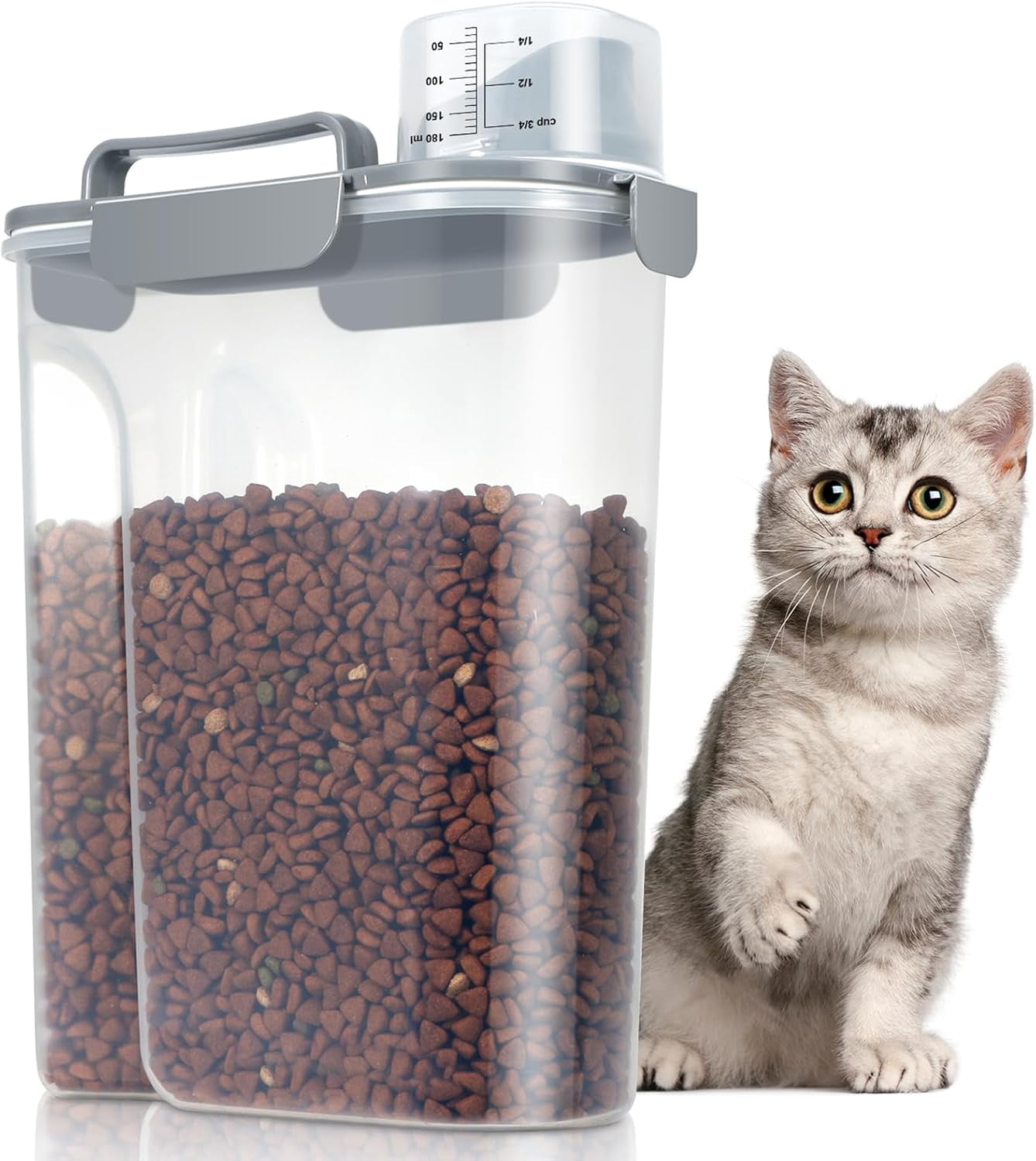
Credit: www.walmart.com
Types Of Cat Food Containers
Choosing the right container helps keep cat food fresh and tasty. Different materials offer different benefits for storage.
Understanding container types can help you pick the best option for your cat’s food.
Plastic Containers
Plastic containers are lightweight and easy to handle. Many have airtight lids to keep food fresh longer.
They come in many sizes and shapes, fitting different spaces in your home.
- Usually affordable and widely available
- Some plastics are BPA-free for safety
- May stain or absorb odors over time
- Easy to clean and dishwasher safe
Metal Containers
Metal containers are sturdy and durable. They protect food from light and pests well.
Common metals include stainless steel and aluminum, which do not rust easily.
- Keep food cool and dry
- Often have secure locking lids
- Less likely to absorb smells
- Can be heavier than plastic
Glass Containers
Glass containers do not absorb odors or stains. They are easy to clean and look neat.
Many have airtight lids made of plastic or metal to keep food fresh.
- Non-toxic and safe for food storage
- Transparent, so you can see food level
- Fragile and can break if dropped
- Heavier than plastic or silicone
Silicone Options
Silicone containers are flexible and lightweight. They are easy to carry and store.
They often have tight seals and are good for travel or small amounts of food.
- Soft and easy to open lids
- Resistant to stains and odors
- Can be folded or collapsed to save space
- Not as common for large food storage
Key Features To Look For
Choosing the right storage container keeps cat food fresh and safe. It also helps control portion sizes and reduces mess.
Look for containers that fit your needs and make feeding easier for you and your cat.
Airtight Seals
Airtight seals prevent air and moisture from spoiling the food. They keep the food fresh longer and protect it from bugs.
Check for seals made of silicone or rubber. These materials create a tight closure that is easy to open and close.
Size And Capacity
Pick a container size that matches the amount of food you buy. A container that is too big may expose food to air.

Similar Posts


