
Are your kitchen shelves cluttered and hard to navigate? Imagine opening your cabinets and instantly finding exactly what you need without any hassle.
Organizing your kitchen shelves isn’t just about tidiness—it can save you time, reduce stress, and even make cooking more enjoyable. You’ll discover simple, practical steps to transform your shelves into a neat, easy-to-use space. Ready to make your kitchen work for you?
Let’s get started.
Assess Your Kitchen Space
Organizing kitchen shelves starts with knowing your kitchen well. You need to look at the space you have before you start arranging items.
By assessing your kitchen space, you can use your shelves in the best way. This helps keep your kitchen neat and easy to work in.
Measure Shelf Dimensions
Measure the width, height, and depth of each shelf. Write down these numbers so you know how much space you have.
Knowing shelf sizes helps you choose the right containers and decide where to put big or small items.
- Use a tape measure for accuracy
- Measure from wall to wall for width
- Check the space between shelves for height
- Measure from front to back for depth
Identify High-use Areas
Look at where you use your kitchen most. These spots should be easy to reach and well organized.
Place items you use daily in these areas. Store less-used items in harder-to-reach shelves.
- Near the stove for spices and oils
- Close to the sink for cleaning supplies
- At eye level for plates and cups
- Lower shelves for pots and pans
Evaluate Storage Needs
Think about what you store on your shelves. Group similar items to see how much space each group needs.
Check if you need extra containers or dividers to keep things tidy and easy to find.
- Food items like cans, jars, and boxes
- Cookware such as pots and pans
- Utensils and small tools
- Cleaning supplies and extras
Declutter Before Organizing
Organizing kitchen shelves starts with decluttering. A clean space makes it easier to find what you need.
Remove everything from the shelves. This helps you see all your items clearly and decide what to keep.
Sort Through Items
Go through all the items on your shelves. Group similar things like cans, spices, and utensils.
Sorting helps you spot duplicates and things you no longer use. This step makes organizing simpler.
Discard Expired Products
Check expiration dates on all food products. Throw away anything that is past its date.
Expired items can be unsafe to eat and take up space. Keep only fresh and safe products.
Donate Unused Utensils
Find utensils and tools you do not use anymore. They might be useful to someone else.
Donate these items to local charities or friends. This helps reduce clutter and supports others.
Choose The Right Storage Solutions
Organizing kitchen shelves well helps you find items fast. Picking the right storage tools makes your kitchen neat and tidy.
Use containers, baskets, and risers to fit everything in place. These tools keep your shelves clean and easy to use.
Use Clear Containers
Clear containers let you see what is inside without opening them. They keep food fresh and protect it from dust and bugs.
- Choose containers with tight lids to keep air out.
- Label each container for quick identification.
- Pick stackable containers to save shelf space.
Incorporate Baskets And Bins
Baskets and bins group similar items together. They stop small things from falling or getting lost on shelves.
| Type | Best Use | Material |
| Wire Basket | Fruits and vegetables | Metal |
| Plastic Bin | Snacks and packets | Plastic |
| Woven Basket | Napkins and utensils | Natural fibers |
Add Shelf Risers
Shelf risers create extra levels on your shelves. They help store more items without clutter.
- Use risers to separate tall and short items.
- Place frequently used items on top for easy reach.
- Choose risers that fit your shelf size perfectly.

Credit: www.detroitnews.com
Group Similar Items Together
Organizing kitchen shelves makes cooking easier and faster. Grouping similar items helps find what you need quickly.
This guide shows ways to arrange your kitchen shelves by grouping items smartly.
Organize By Category
Sort your kitchen items into clear categories. For example, keep canned goods, spices, and snacks in separate groups.
- Place all baking ingredients like flour and sugar together.
- Group canned vegetables and beans on one shelf.
- Keep oils and vinegars in the same area.
- Store snacks such as chips and nuts in one container or shelf space.
Create Zones For Cooking And Baking
Set up distinct zones on your shelves for cooking and baking items. This saves time during meal prep.
| Zone | Items | Suggested Shelf |
|---|---|---|
| Cooking | Spices, oils, sauces, pots, pans | Lower or middle shelves |
| Baking | Flour, sugar, baking powder, mixing bowls | Upper shelves or a separate cabinet |
Store Frequently Used Items Accessibly
Keep your everyday items where you can reach them fast. This avoids searching and clutter.
Use this quick list to place your frequently used items:
- Store coffee and tea near your coffee maker.
- Place cooking oils and salt close to the stove.
- Keep cutting boards and knives nearby for easy access.
- Use clear containers for snacks and cereals to grab them fast.
Maximize Vertical Space
Using vertical space helps you store more in your kitchen. It keeps shelves neat and easy to access.
Organizing shelves by going up saves room on counters and cabinets. This way, you get more space for all items.
Install Hooks And Racks
Hooks and racks add extra storage under shelves or on walls. They hold utensils, mugs, or small pots.
Using these tools keeps items off the shelf surface and frees room below for other things.
- Hang mugs on hooks under cabinets
- Use racks for spices or lids
- Install hooks for kitchen towels or tools
Utilize Door Storage
Kitchen cabinet doors can store items you use often. Add shelves or small baskets on the inside.
This keeps things like cutting boards, foil, or cleaning supplies easy to find and off main shelves.
- Attach spice racks inside doors
- Use slim baskets for small packets
- Hang small tools or measuring spoons
Stack Items Strategically
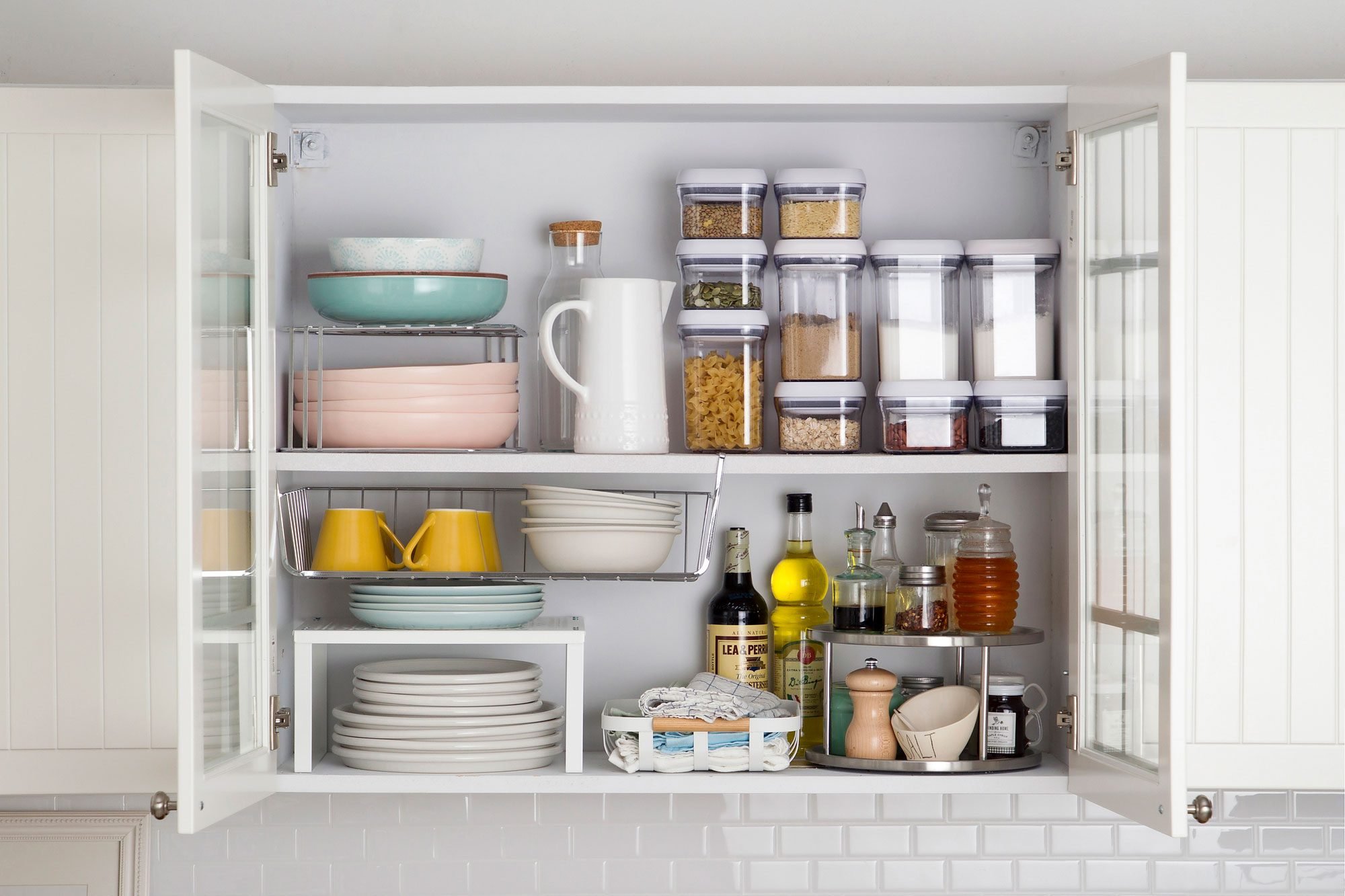
Stacking items saves shelf space and keeps your kitchen tidy. Use stacking shelves or risers if needed.
Put heavier or less-used items on the bottom and lighter ones on top for easy reach and safety.
- Stack plates and bowls by size
- Use clear containers for dry goods
- Place stackable cans or jars neatly
Credit: www.rd.com
Label Shelves And Containers
Organizing kitchen shelves and containers helps keep your space neat. Clear labels make it easy to find items quickly.
Using labels saves time when cooking and cleaning. It also helps you keep track of your supplies.
Use Clear, Readable Labels
Choose labels with large fonts and simple words. Print or write labels clearly to avoid confusion.
Place labels where they are easy to see, like the front of containers or shelf edges.
Implement Color Coding
Use colors to group similar items. This helps you find things faster without reading every label.
- Red labels for spices
- Blue labels for baking supplies
- Green labels for snacks
- Yellow labels for canned goods
Update Labels Regularly
Check your labels often. Remove old labels and add new ones when items change.
| Time Frame | Label Action |
| Every 3 months | Review and clean labels |
| When items run out | Replace or remove labels |
| After rearranging | Update label positions |
Maintain Organized Shelves
Keeping kitchen shelves organized makes cooking easier and faster. It also helps you find items quickly.
Organized shelves reduce clutter and keep your kitchen looking neat. Simple habits keep shelves tidy every day.
Regularly Review Contents
Check your shelves often to see what you have. Remove expired or unused items to free space.
Sort similar items together. Group cans, spices, and dry goods for easy access and better use.
- Look for expired food and throw it away
- Take out duplicates or things you do not use
- Put items back in their right place
Clean Shelves Periodically
Wipe your shelves with a damp cloth every few weeks. This removes dust, spills, and crumbs.
Empty shelves before cleaning. Let them dry well before putting items back to avoid damage.
- Remove all items from shelves
- Use mild soap and water to clean
- Dry shelves completely before restocking
Adjust Organization As Needed
Change your shelf layout if your needs change. Move items you use often to easy spots.
Use containers or labels if it helps keep things neat. Keep your system simple to follow every day.
- Place daily use items at eye level
- Use baskets or bins for small packages
- Label shelves or containers clearly

Credit: letshomebody.com
Frequently Asked Questions
How Do I Start Organizing Kitchen Shelves?
Begin by emptying all shelves completely. Sort items by categories like spices, utensils, and cookware. Discard expired or unused items to create space.
What Are The Best Containers For Kitchen Shelves?
Use clear, airtight containers for dry goods. Label each container for easy identification. Opt for uniform sizes to maximize shelf space efficiently.
How Can I Maximize Space On Kitchen Shelves?
Utilize vertical space with stackable containers or shelf risers. Hang hooks for mugs or utensils underneath shelves to free up room.
How Often Should I Reorganize Kitchen Shelves?
Reorganize shelves every 3 to 6 months. Regular maintenance helps keep clutter minimal and ensures easy access to essentials.
Conclusion
Organizing kitchen shelves makes cooking easier and faster. Keep similar items together for quick access. Use clear containers to see what you have inside. Regularly check and remove expired or unused items. A tidy shelf saves space and reduces clutter.
Small changes create a big difference in your kitchen. Start today and enjoy a neat, functional kitchen. Simple steps lead to lasting order and calm.