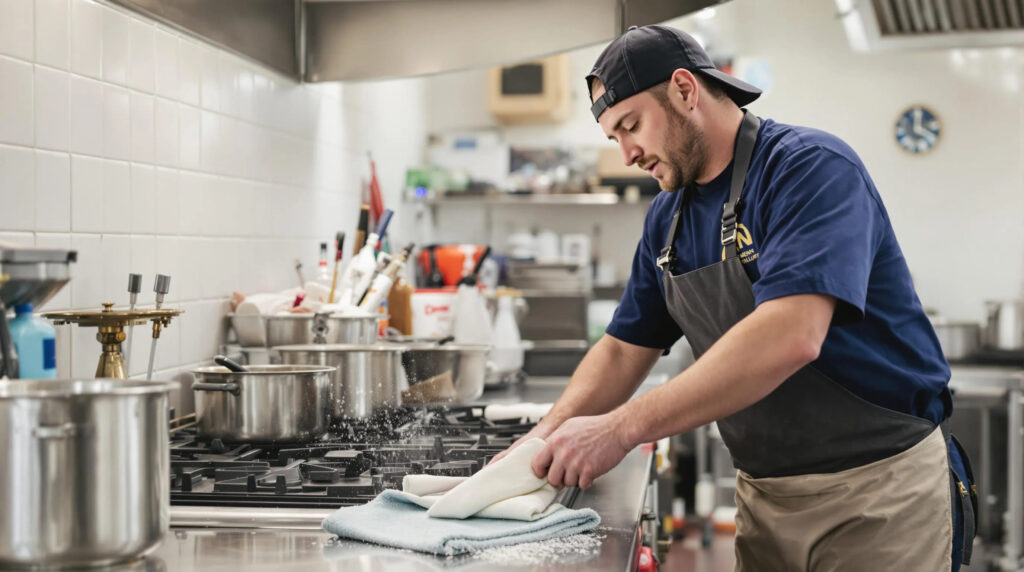
Have you ever wondered who keeps the kitchen in a restaurant spotless behind the scenes? You might think it’s just one person or that chefs handle the cleaning themselves.
But the truth is, there’s a whole team working hard to make sure your food is prepared in a clean and safe space. Understanding who cleans the kitchen can change the way you see your favorite restaurant and even help you appreciate every meal more.
Keep reading, and you’ll discover the secret heroes of the kitchen and why their work matters to your dining experience.

Credit: skyrexpropertyservices.ca
Kitchen Cleaning Roles
Keeping a restaurant kitchen clean is a team effort. Each staff member has specific cleaning duties.
Clear roles help maintain hygiene and a safe work environment. Let’s look at who cleans what in the kitchen.
Dishwashers’ Responsibilities
Dishwashers clean plates, pots, and utensils. They also sanitize work areas and keep the dish pit tidy.
- Scrape and rinse dishes before washing
- Load and unload the dishwasher
- Clean and sanitize sinks and counters
- Empty trash and clean floors around the dish area
Line Cooks’ Cleanup Tasks
Line cooks clean their cooking stations after shifts. They wipe down grills, counters, and utensils.
- Wash cutting boards and knives
- Wipe stove tops and counters
- Dispose of food scraps properly
- Sweep and mop the kitchen floor
Sous Chefs And Maintenance
Sous chefs supervise cleaning and handle deeper maintenance tasks. They check equipment and fix minor issues.
| Task | Description |
| Equipment Cleaning | Ensure ovens and refrigerators are clean and working |
| Inventory Check | Inspect cleaning supplies and order more if needed |
| Deep Cleaning | Schedule regular deep cleans for kitchen areas |
Managers’ Oversight
Managers ensure all cleaning duties are done well. They create cleaning schedules and check compliance.
Managers also hold meetings to discuss cleanliness and safety. They train staff on proper cleaning methods.

Credit: menagetotal.com
Cleaning Schedule And Frequency
Keeping a restaurant kitchen clean is very important. It helps keep food safe and the kitchen running well.
Different cleaning tasks happen at different times. Some are done daily, others weekly or seasonally.
Daily Cleaning Routines
Daily cleaning keeps the kitchen safe and tidy every day. Staff clean work surfaces, sinks, and floors.
They also clean cooking tools and empty trash bins often. This prevents germs and bad smells.
- Wipe counters and tables
- Clean cooking equipment
- Sweep and mop floors
- Empty and sanitize trash bins
- Wash and store utensils
Weekly Deep Cleaning
Once a week, the kitchen gets a deeper clean. Staff clean areas that daily cleaning misses.
This includes cleaning behind appliances, inside ovens, and vents. It helps stop grease and dirt buildup.
- Clean oven interiors and grills
- Wash refrigerator shelves
- Scrub walls and ceilings
- Clean exhaust hoods and vents
- Sanitize storage areas
Post-shift Cleanup
After each shift, kitchen staff clean their workstations. This keeps the kitchen ready for the next shift.
They wash dishes, clean counters, and restock supplies. This helps maintain order and hygiene.
- Wash and dry dishes and utensils
- Wipe down all surfaces
- Dispose of food waste properly
- Restock ingredients and tools
- Sanitize cutting boards and knives
Seasonal Maintenance
Seasonal cleaning happens every few months. It involves big tasks to keep the kitchen in top shape.
This work may include checking appliances and fixing small problems. It helps prevent future breakdowns.
- Deep clean refrigeration units
- Inspect and service kitchen equipment
- Clean behind large appliances
- Check plumbing and drains
- Repaint or repair walls if needed
Cleaning Techniques And Tools
Cleaning the kitchen in a restaurant is important for health and safety. Proper cleaning keeps germs away and stops food contamination.
Using the right tools and techniques helps staff clean well and work faster. This ensures a safe place to prepare food.
Sanitizing Surfaces
Sanitizing surfaces kills harmful bacteria and germs on counters and tables. It stops cross-contamination between foods.
Use sanitizers approved for food areas. Apply them after cleaning dirt and grease from surfaces.
- Clean surface with soap and water first
- Apply sanitizer evenly on the surface
- Let sanitizer sit for the time on the label
- Air dry or wipe with a clean cloth
Equipment Cleaning Methods
Kitchen equipment like ovens and mixers must be cleaned daily. This removes food residue and prevents germs.
Use brushes, scrubbers, and cloths made for each type of equipment. Follow cleaning instructions from the manufacturer.
- Disassemble parts if possible for deep cleaning
- Wash parts with hot water and detergent
- Rinse well to remove soap
- Dry parts before reassembling
Safe Chemical Use
Cleaning chemicals must be used carefully to protect workers and food safety. Read labels before use.
Store chemicals away from food and cooking areas. Use gloves and masks if needed to avoid skin or breathing problems.
- Use only approved chemicals for kitchens
- Do not mix different chemicals
- Follow the right amounts and instructions
- Keep chemicals in labeled containers
Waste Disposal Practices
Proper waste disposal keeps the kitchen clean and prevents pests. Separate food waste from other trash.
Use covered bins and empty them often. Clean bins regularly to stop bad smells and germs.
- Sort recyclables and compostable waste
- Use leak-proof bags for food waste
- Keep waste areas clean and tidy
- Follow local waste disposal rules
Health And Safety Standards
Keeping a restaurant kitchen clean is important for health and safety. It helps stop germs and keeps food safe.
Many rules guide who cleans the kitchen and how they do it. These rules protect both workers and customers.
Food Safety Regulations
Food safety rules tell staff how to clean kitchen areas properly. These rules help stop foodborne illnesses.
Cleaning must follow set times and use approved cleaning products. This keeps surfaces free from harmful bacteria.
- Use hot water and soap to clean surfaces
- Sanitize cutting boards and utensils after use
- Store cleaning products away from food
Preventing Cross-contamination
Cross-contamination happens when germs spread from one food to another. Cleaning prevents this problem.
Staff clean tools and surfaces after handling raw meat or seafood. They use separate equipment for different foods.
- Wash hands often during food prep
- Use color-coded cutting boards
- Clean and disinfect counters regularly
Pest Control Measures
Pests like rodents and insects carry germs that can contaminate food. Cleaning helps keep pests away.
Staff clean spills and remove trash daily. They also check for holes or cracks where pests can enter.
- Seal gaps around doors and windows
- Keep trash bins covered and clean
- Store food in sealed containers
Staff Training Protocols
Staff must learn proper cleaning and safety rules. Training makes sure everyone knows their cleaning duties.
Regular training sessions teach how to use cleaning tools and follow safety steps. This reduces accidents and illness.
- Explain food safety laws and cleaning schedules
- Show how to clean and sanitize properly
- Test staff knowledge with quizzes or checks
Challenges In Kitchen Cleaning
Cleaning a restaurant kitchen is a tough job. It requires careful work to keep the area safe and clean.
Many challenges make kitchen cleaning hard. These include time limits, heavy tools, busy spaces, and sudden messes.
Time Constraints
Kitchen cleaning must happen quickly. Staff need to clean between busy meal times.
Rushing can cause mistakes. Cleaners must balance speed and quality to keep the kitchen safe.
Heavy Equipment Maintenance
Kitchens have large machines like ovens and fryers. These need regular cleaning and care.
Cleaning heavy equipment is hard. It takes skill and sometimes special tools to do it right.
Managing High Traffic Areas
Some kitchen spots are used a lot. These areas get dirty fast and need frequent cleaning.
Workers must clean these places while still working. This keeps the kitchen safe without slowing down service.
- Floors near cooking stations
- Food prep counters
- Sinks and dishwashing areas
Handling Unexpected Spills
Spills happen suddenly in busy kitchens. Quick action is needed to stop accidents and contamination.
Staff must clean spills fast and safely. Using the right materials helps keep the kitchen clean and safe.

Credit: skyrexpropertyservices.ca
Frequently Asked Questions
Who Is Responsible For Cleaning The Kitchen In A Restaurant?
The kitchen cleaning is primarily handled by dishwashers and kitchen staff. They ensure all surfaces, utensils, and equipment are sanitized. This maintains hygiene and food safety standards in the restaurant.
How Often Is A Restaurant Kitchen Cleaned?
A restaurant kitchen is cleaned multiple times daily. Spot cleaning happens during service, while deep cleaning occurs after closing. Regular cleaning prevents contamination and keeps the kitchen safe for food preparation.
What Tools Are Used To Clean A Restaurant Kitchen?
Common cleaning tools include mops, scrubbers, degreasers, and sanitizing sprays. Staff also use commercial dishwashers and gloves to maintain cleanliness and safety during the cleaning process.
Why Is Kitchen Cleaning Important In Restaurants?
Kitchen cleaning prevents foodborne illnesses and cross-contamination. It ensures compliance with health regulations and creates a safe environment for staff and customers. A clean kitchen supports efficient food preparation and service.
Conclusion
Keeping a restaurant kitchen clean takes teamwork and care. Each staff member has a role to keep the space safe and tidy. Chefs, dishwashers, and cleaners all help maintain hygiene daily. Clean kitchens prevent accidents and keep food fresh and healthy.
Regular cleaning also helps the restaurant run smoothly. Everyone shares the responsibility to keep the kitchen spotless. This effort shows respect for the food and the customers. A clean kitchen means better meals and happier guests. It is a simple step that leads to great success in any restaurant.